Types of Beanies: The Top 5 Styles, Plus How to Choose and Wear One
August 12, 2026 · 11 min read
Winter walks in without asking, and your customers reach for a beanie before they reach for anything else. That's not an accident. A soft knit hat keeps heat locked in, wraps around any head shape, and still looks good doing it. But “beanie” covers a lot of ground. Slouch, fisherman, skull cap, high top, pom pom — five distinct types of beanies, each with its own fit, texture, and personality.
If you're picking beanie styles for your brand, your team, or your own closet, knowing the difference matters. This guide breaks down each style, explains what beanies are made of, and shows how RELYmedia turns a plain knit cap into custom headwear that carries your logo all winter long. Whether you're after personalized beanies for a small team or a bulk run of embroidered hats for a company-wide giveaway, the same five core styles apply.
What Is a Beanie?
A beanie is a knitted cap that hugs your head from the brow to the base of your skull. Wool, cotton, acrylic, and polyester blends all show up in beanie construction, and most knits stretch enough to fit almost any head size. That's where “one size fits all” comes from — a real, practical feature, not just marketing talk.
People call this winter hat by a dozen names: toque, watch cap, stocking cap, skully, ski cap. If you're searching for another word for beanie, those five cover almost every regional variation you'll run into. The word “beanie” itself traces back to early-1900s slang, when “bean” meant head. Factory workers and fishermen wore them first, for a simple reason: warmth without bulk. The style stuck around because it works, and today it sits on runways as often as it sits on job sites, proof that good winter fashion often starts with function.
Beanie vs. Toque vs. Toboggan: What's the Difference?
Search “beanie vs toboggan” and you'll find people arguing about it constantly. Here's the short answer: these words mostly describe the same hat, sorted by region.
- Beanie – the most common US term, used everywhere from California to Chicago
- Toque – common in Canada and parts of the northern US
- Toboggan – Southern US slang for the same knit cap
- Watch cap – a military-rooted term, now tied mostly to cuffed styles
- Skully – slang for the tightest, no-frills version
None of these words describe a genuinely different hat. Skull caps and cuffed watch caps do differ from slouch and pom pom styles, though, and that's where real construction differences begin.
The 5 Most Popular Types of Beanies
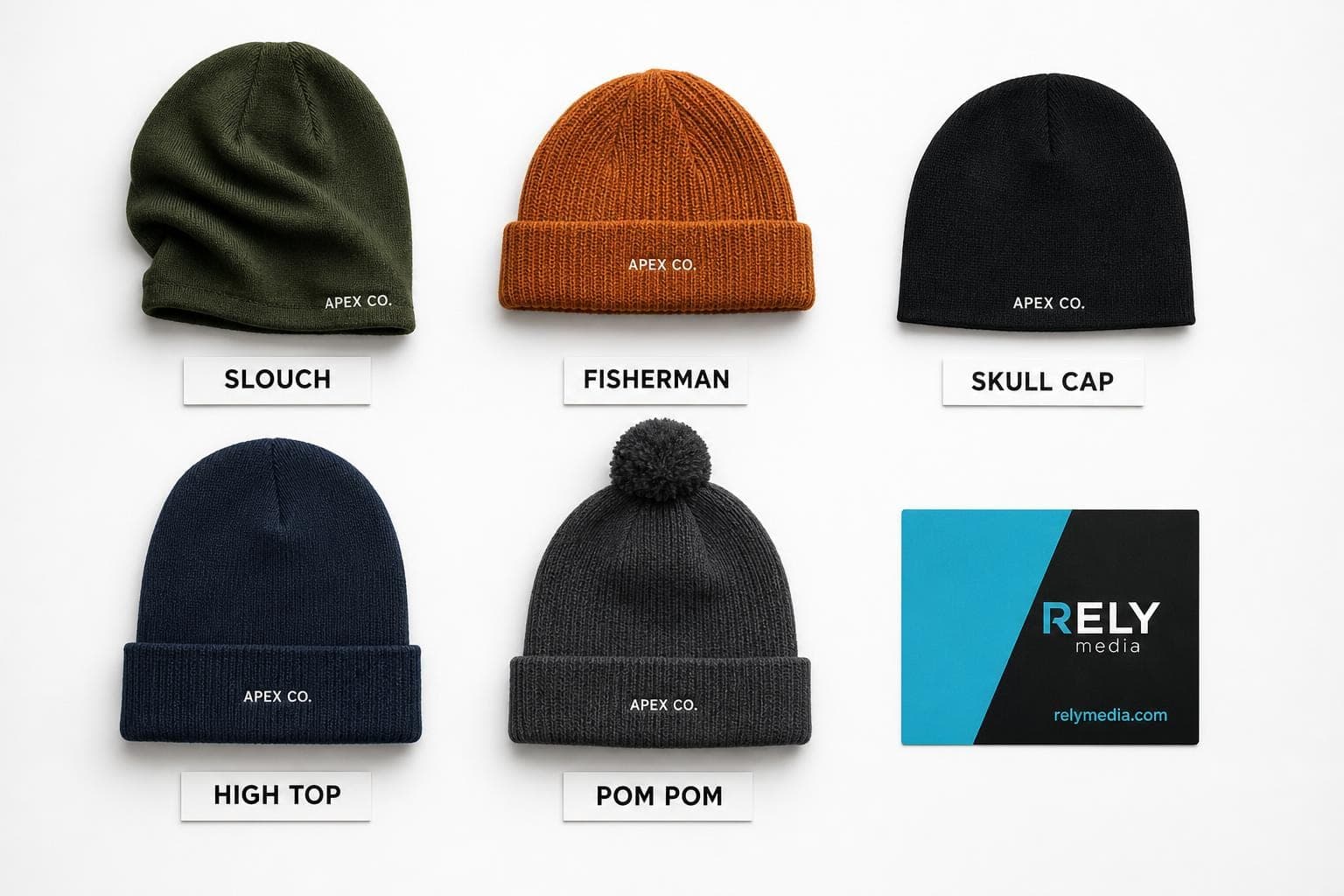
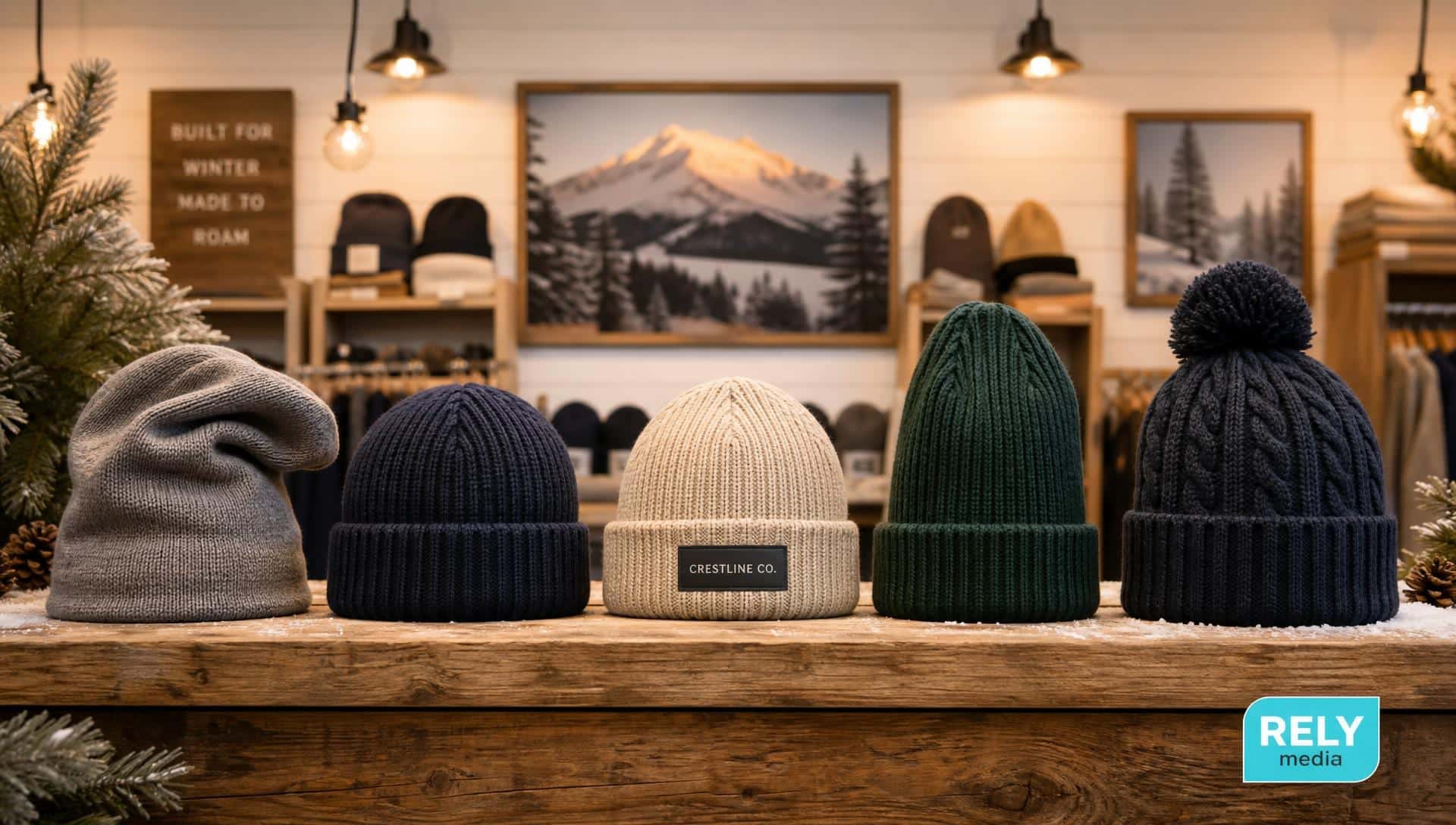
Beanie styles range from barely-there skull caps to slouchy, oversized knits that pool at the back of your neck. Five styles dominate the market, and each one suits a different look, climate, and branding goal.
Slouch Beanie
The slouch beanie is the beanie most people picture first. It's roomy, cuffless, and sits loose enough to droop slightly at the back, hence the name. This shape covers your ears and neck without a fold, and it works well for both sports apparel and streetwear brands alike. Soft acrylic beanies and acrylic knit blends dominate this category because they hold shape while still draping naturally.
Fisherman Beanie
Sailors and dockworkers wore this style long before it became a streetwear staple. The fisherman cap, sometimes called a watch cap hat or ski hat, features a tight, ribbed knit cuff sewn in place rather than a loose, adjustable cuff you fold by hand. It sits closer to the head than a cuffless beanie, with the folded cuff often resting right above the ear. Rib knit and chunky knit versions both fall under this cuffed beanie category.
Skull Cap
Strip away the cuff, the peak, and the slouch, and you get a skull cap, also called a skull beanie, the most minimal beanie style out there. This low-profile beanie hugs the head from every angle, which makes it a favorite for layering under helmets or hoods. Fleece-lined and micro fleece versions add warmth without adding bulk, and hypoallergenic yarns keep it comfortable for sensitive skin, while built-in moisture management keeps things dry during active wear.
High Top Beanie
Take a cuffed beanie and stretch the crown upward instead of letting it droop, and you get a high top, or peaked beanie. This style can add a few extra inches of height, and chunkier knit patterns show off texture better on a taller crown. It's a bolder look, built for wearers who want their headwear to make a statement.
Pom Pom Beanie
The pom pom beanie, or bobble hat, tops any base style with a yarn ball at the crown. Nobody agrees on where the pom-pom tradition started. French sailors avoiding low ship ceilings, leftover yarn scraps, and old European folk costumes all show up as theories. Whatever the true origin, this style remains one of the most requested for team merchandise and seasonal promotional products.
| Beanie Style | Fit | Best For |
|---|---|---|
| Slouch | Loose, cuffless | Streetwear, casual branding |
| Fisherman | Snug, cuffed | Rugged, outdoor apparel brands |
| Skull Cap | Tight, low-profile | Layering, minimalist logo placement |
| High Top | Cuffed, tall crown | Bold, statement branding |
| Pom Pom | Varies, plus yarn ball | Team merchandise, corporate gifts |
What Are Beanies Made Of?
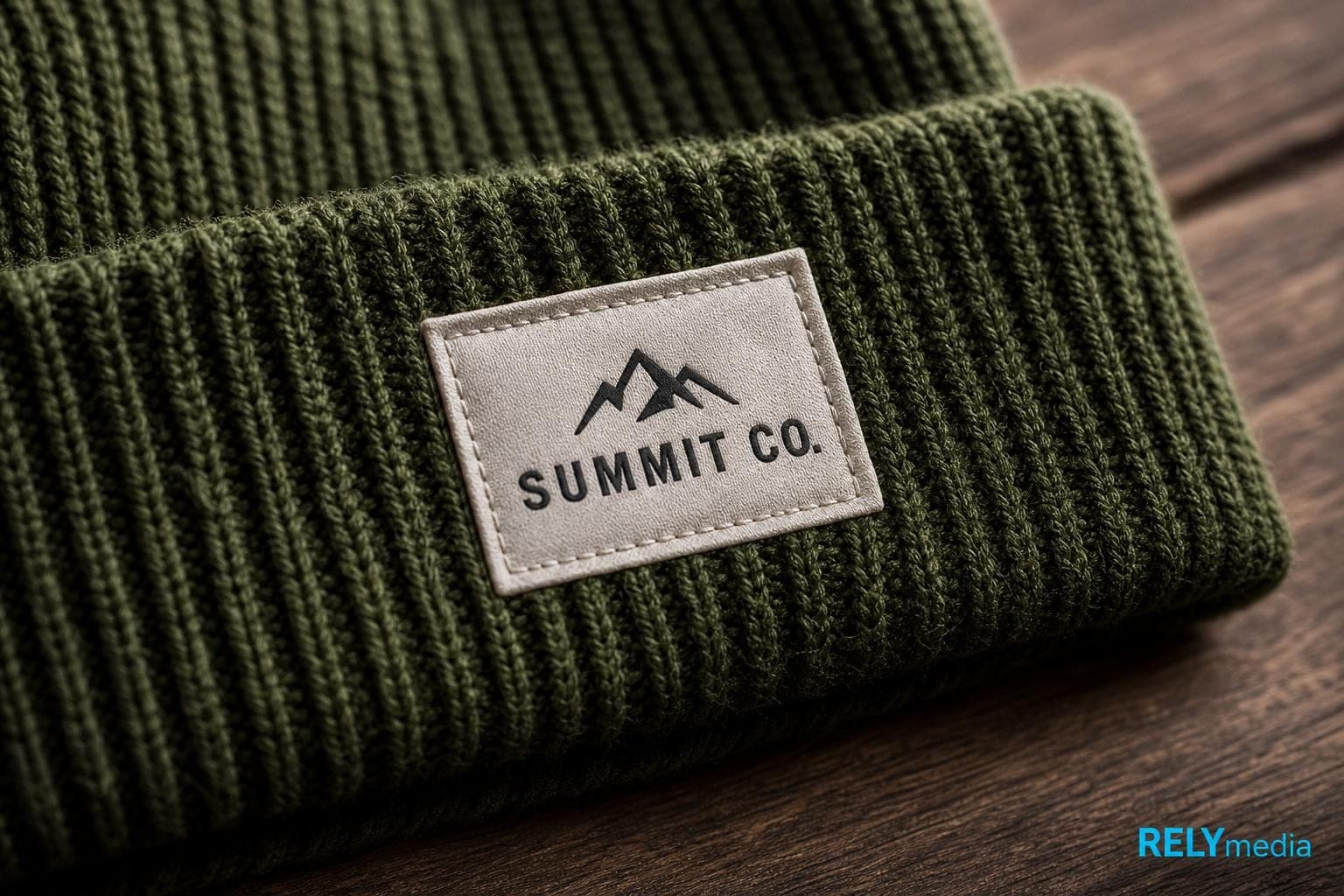
Material changes everything about how a knit cap feels and performs.
- Acrylic (acrylic beanie) – affordable, holds color well, resists shrinking
- Wool (wool beanie) – naturally warm, slightly itchy for some wearers
- Cotton (cotton beanie) – breathable, better for mild cold than deep winter
- Polyester (polyester beanie) – durable, often blended with fleece for extra warmth
- Fleece-lined (fleece beanie) – adds an inner layer built for serious cold-weather clothing
Some knit hats also add moisture-wicking fibers or a tricot lining, both aimed at keeping sweat off your scalp during active wear. Hypoallergenic acrylic yarns show up often in affordable custom knit hats, since they avoid the itch some wool blends cause.
Weight matters just as much as fiber type. A thin, single-layer knit works fine for mild fall weather, while a double-layer or fleece-lined build earns its keep once temperatures drop below freezing. If your team spends real time outdoors, that extra lining isn't a luxury. It's the difference between a beanie that gets worn all season and one that sits in a drawer after the first cold snap.
“Beanies with a moderate, tonal logo tend to stay in someone's winter rotation for years. Oversized designs turn heads once, but subtle branding is what actually keeps a beanie on someone's head.” — RELYmedia's embroidery team
Beanies for Every Wearer: Men's, Women's, and Unisex Styles
Most beanie styles work as unisex beanies right off the shelf, since a stretchy knit doesn't care much about gender. That said, men's beanies tend to lean toward slouch and fisherman cuts, while women's beanies show up more often in slimmer, fitted profiles or with added trim. One-size beanies fit the widest range of head sizes, which is exactly why brands ordering in bulk almost always stick with that option instead of splitting an order into multiple sizes.
If you're outfitting a mixed group, whether that's an office, a sports team, or an event crew, a single unisex style keeps ordering simple and keeps everyone in matching gear without guessing at sizes.
Why People Love Beanies
Beanies didn't become an everyday wardrobe staple by accident. Cozy winter hats come and go in popularity, but this one holds steady as a casual winter accessory year after year, whether it's a premium wool build or an affordable acrylic option.
- Warm and lightweight – a warm beanie or lightweight beanie gives real insulation without the bulk of a heavier winter cap
- One-size convenience – a stretchy beanie or soft beanie fits nearly any head, no sizing charts needed
- Easy to customize – a wide, flat surface built for embroidery, patches, or prints
- Affordable at scale – bulk custom beanies often cost close to a basic branded T-shirt
- Always in style – winter fashion trends shift, but the humble beanie never really leaves
- Genuinely versatile – equally at home as a high-quality gift, a casual streetwear piece, a fashion accessory, or part of a winter apparel uniform
How to Wear a Beanie: Fit and Styling Tips
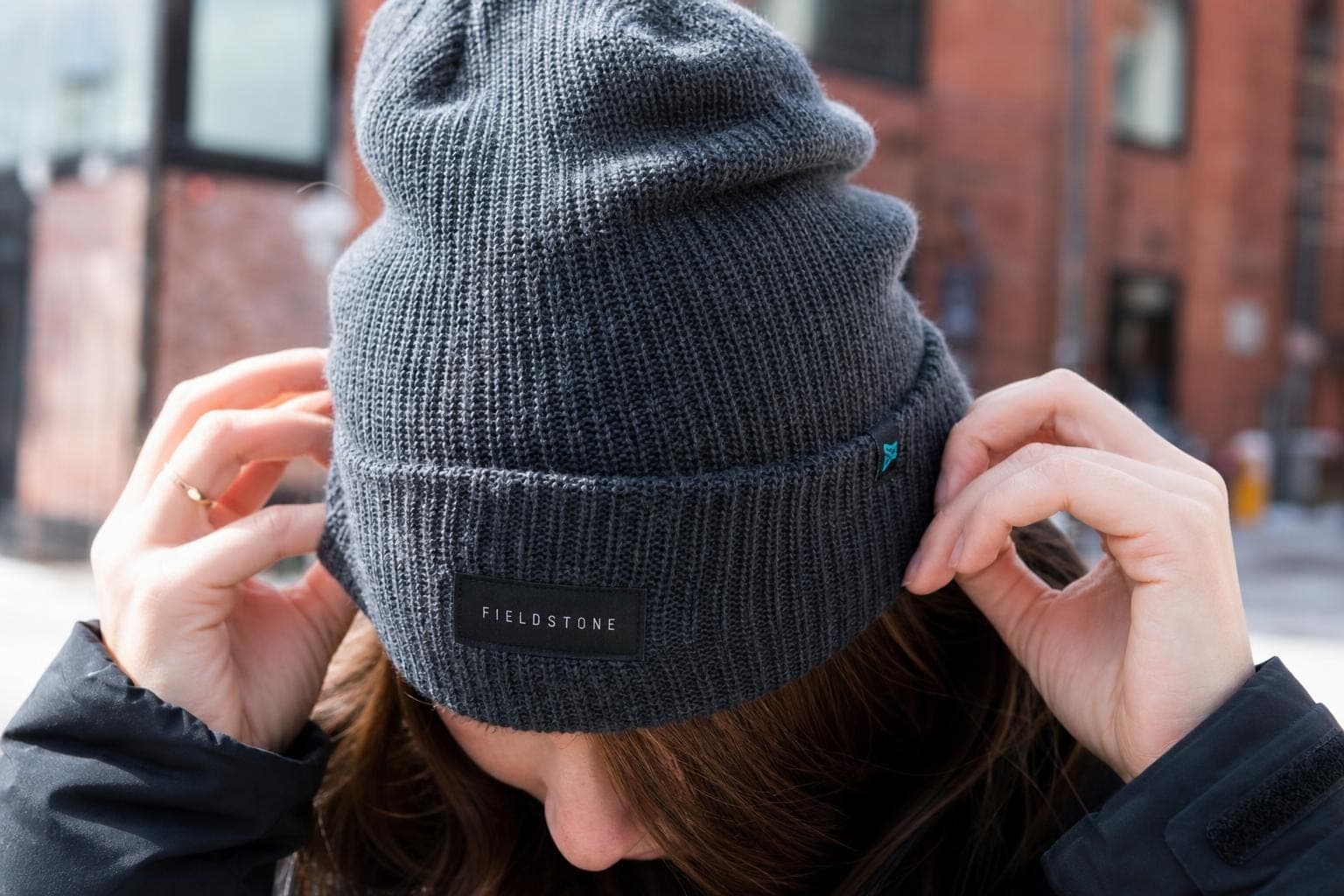
Fit changes how any beanie style looks. Pull a slouch beanie back slightly so it sits loose, not tight. Roll a fisherman cap's cuff just above your eyebrows for that classic dockworker look. Skull caps should sit snug against your hairline, with no folded edge at all.
One simple rule works across every style: thicker hair or heavier knits call for a slightly looser fit, while thin hair or shorter styles look sharper snug. Either way, avoid pulling any beanie down over your eyebrows. That reads as sloppy, not stylish, no matter how nice the knit texture is underneath.
Color plays into the styling equation too. Neutral tones like charcoal, navy, and khaki pair with almost any outfit, which is exactly why they dominate corporate gifts and employee apparel orders. Brighter colors work well for event merchandise and team gear, where standing out in a crowd is actually the goal.
Best Methods to Customize a Beanie
Turning a plain knit cap into branded headwear comes down to picking the right decoration method for the fabric. Beanie embroidery, custom embroidery, and logo embroidery all fall under the same umbrella, but the details matter once you get into headwear branding and apparel branding.
Embroidery
Embroidery remains the top choice for beanie customization, and for good reason. It holds up through repeated washes, reads clearly from a distance, and works on almost any knit surface. Most embroidered logos land around four inches wide, since larger designs can weigh down thinner acrylic knit.
Patches
Woven and embroidered patches offer more design flexibility than direct embroidery. You can press a patch onto spots a sewing machine can't easily reach, and patches come in more finish options, including leather, chenille, and twill.
Screen Printing
Screen printing works best on flat, tightly woven fabric, which makes stretchy knit caps a tougher surface. Simple, bold logos with limited fine detail still turn out well, especially with discharge ink built for stretchy apparel.
Custom Beanie Design Tips
A great logo doesn't guarantee a great beanie. Placement, size, and file quality all shape the final result just as much as the artwork itself.
- Choose the right style – muted colors and classic shapes suit broad audiences; bolder styles fit niche markets
- Keep the design simple – thick lines and minimal detail translate better onto knit texture
- Use a quality art file – vector formats scale cleanly, and raster files need enough resolution to avoid blur (see the table below)
- Size logos moderately – four inches wide is the sweet spot; oversized designs add weight and stand out for the wrong reasons
- Match the hat color – tonal logos get worn more often, since they blend instead of shout
- Consider placement – most logos sit front and center, but side or back placement works well on certain cuffed styles
Accepted art file types:
| File Type | Category | Notes |
|---|---|---|
| AI file | Vector artwork | Scales cleanly to any size |
| EPS file | Vector artwork | Same benefits as AI, works with more software |
| PDF artwork | Print-ready artwork | Good universal backup for vector logo files |
| PNG file | Raster artwork | Needs high resolution to avoid blur |
| JPG file | Raster artwork | Fine for reference, less ideal for final print |
| PSD file | Layered artwork | Useful for complex, multi-color logos |
If all you've got is a low-resolution logo, RELYmedia's team can often clean it up or trace it into scalable artwork before it goes to production.
Branded Beanies for Business
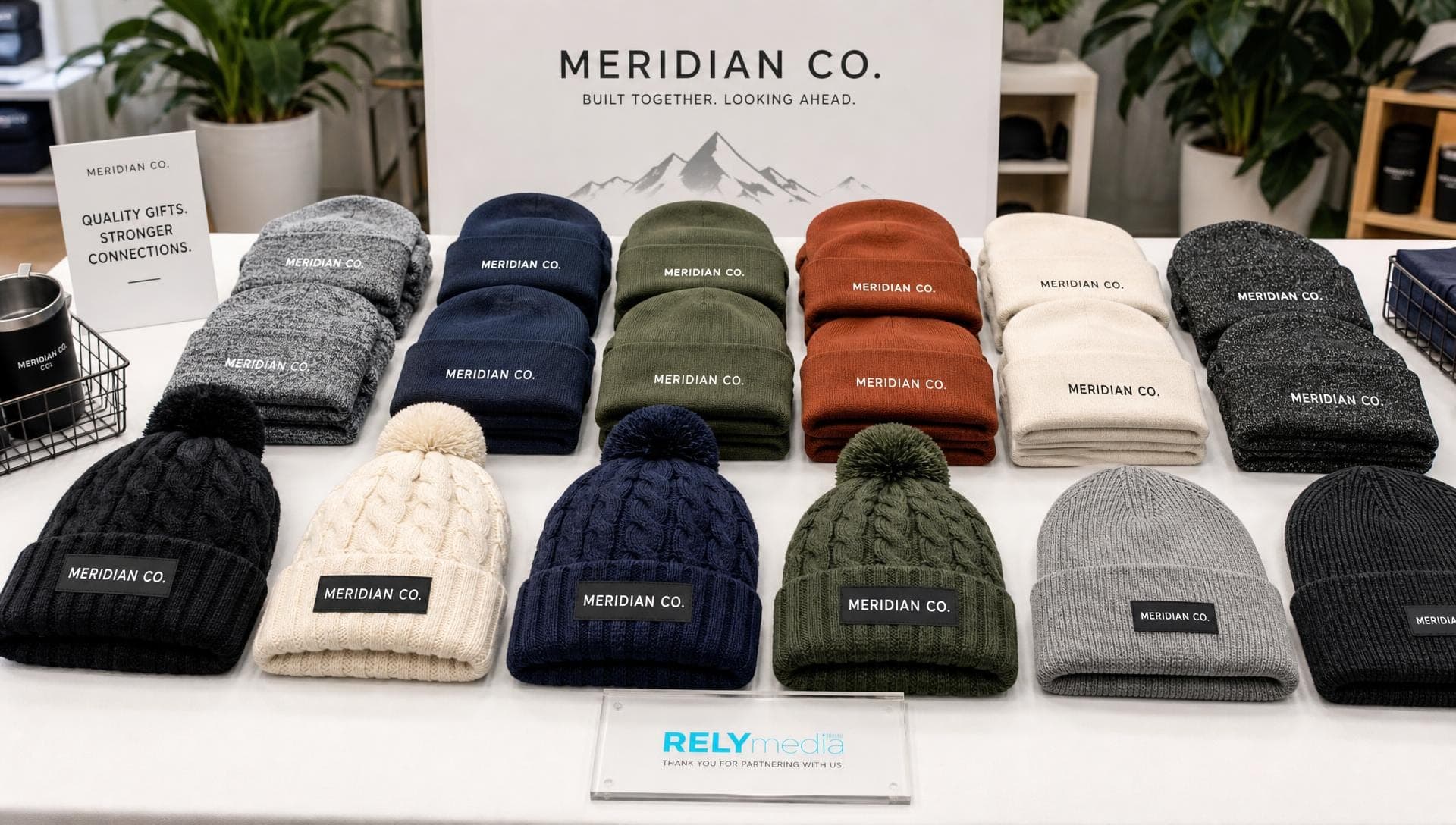
Companies don't just order beanies for fun. They order them to solve a real problem: getting a logo in front of people who'll actually keep the item around. Custom company beanies show up constantly as:
- Team apparel and company uniforms – matching gear for warehouse crews, retail staff, or field teams
- Employee apparel and branded employee apparel – onboarding kits, holiday gifts, or milestone rewards
- Event merchandise and custom event apparel – trade show giveaways, conference swag, grand openings
- Corporate gifts and branded gifts – client appreciation packages sent out during the holidays
- Personalized gifts and company giveaway items – smaller batches for a specific team or department
- Seasonal promotional products and winter promotional items – anything timed around the first cold snap
Each of these use cases points back to the same five beanie styles, just decorated and packaged differently depending on who's wearing them and why.
Create Your Own Custom Beanies with RELYmedia
Ready to turn any of these types of beanies into real branded merchandise? RELYmedia handles the entire process, from art file review to embroidery digitizing to a final quality check, backed by fast turnaround times and a team that actually answers the phone. Whether you need a small batch of custom logo beanies for your staff or a full wholesale order of promotional beanies for a nationwide campaign, RELYmedia's design studio makes it simple to upload your logo and see a proof before you commit to anything.
Start your custom beanie order with RELYmedia today
Get a proof back before you spend a dime.
Ready to print your team's name on premium apparel?
Fill in your details and a RELYmedia specialist will come back to you with a custom quote — fast turnaround, no obligation.
- ⚡Same-day response on business days
- 🎨Free design assistance included
- 🚚Rush order & fast delivery available
- 💰Price beat guarantee on every order
Shop custom beanies
See all custom hats & caps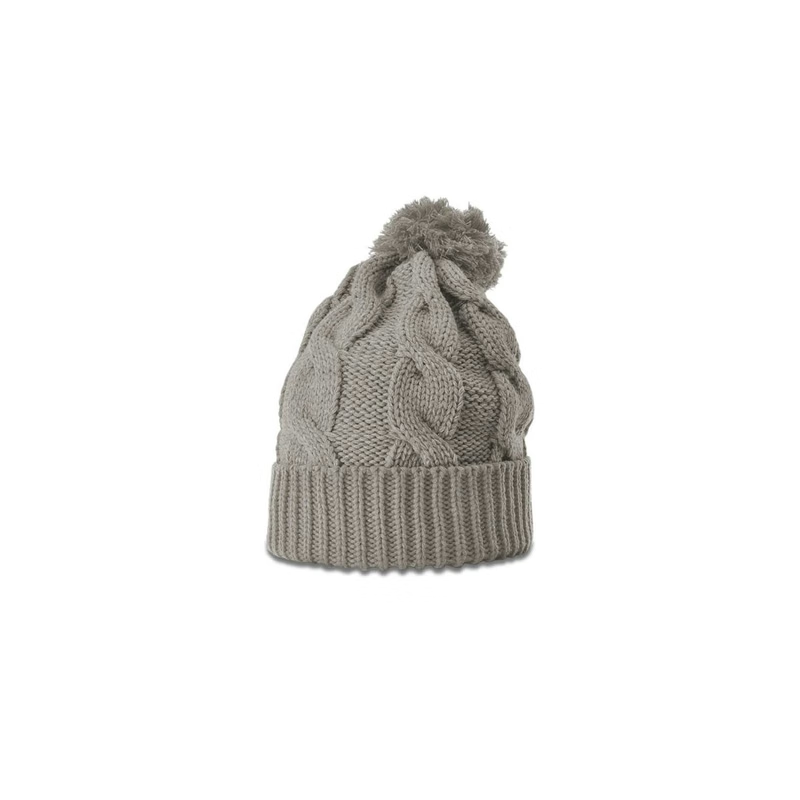
Chunk Twist Knit Beanie with Cuff & Pom
$16.00
View product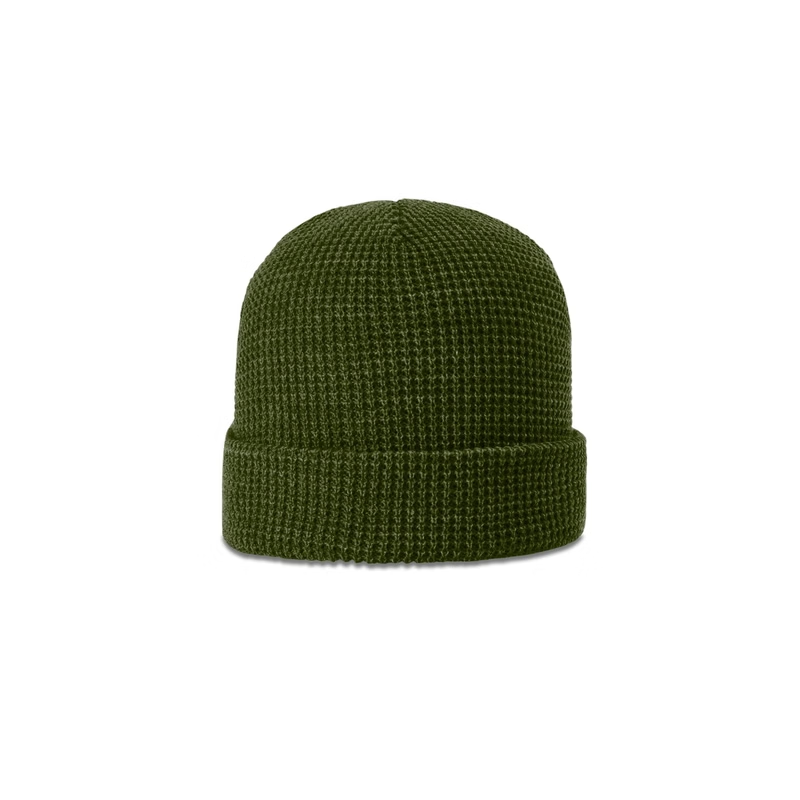
Waffle Knit Beanie with Cuff
$8.80
View product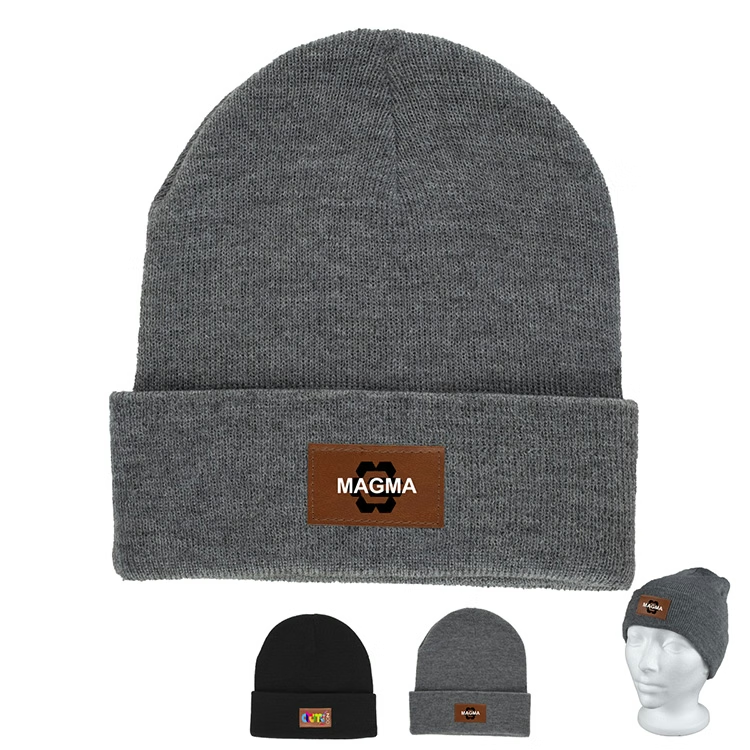
TIBURON Fashion and Performance Knit Cuffed Beanie with Patch
$5.59 - $6.00
View product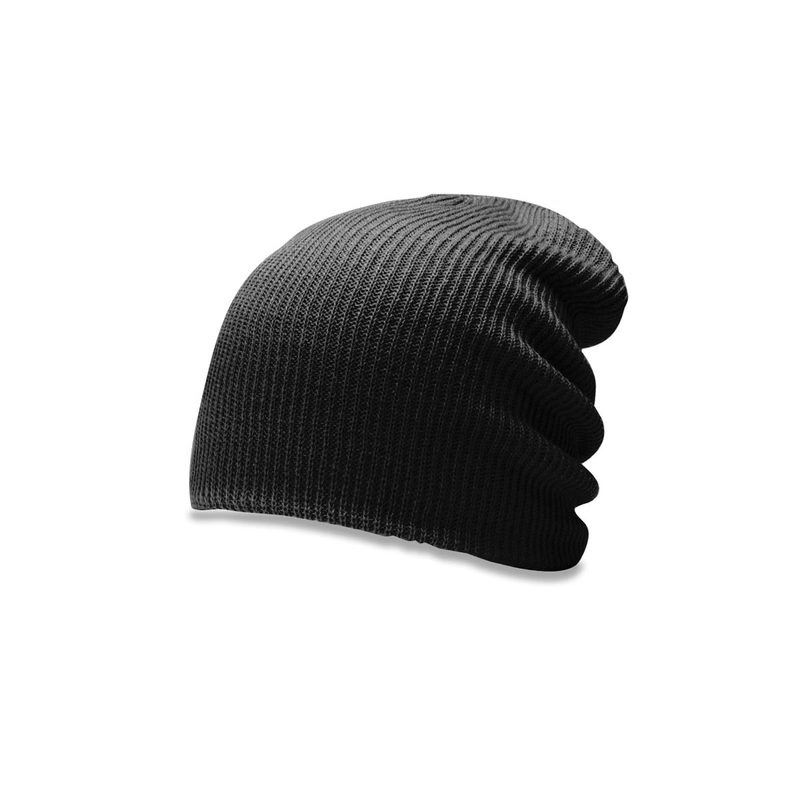
Super Slouch Knit Beanie
$10.00
View product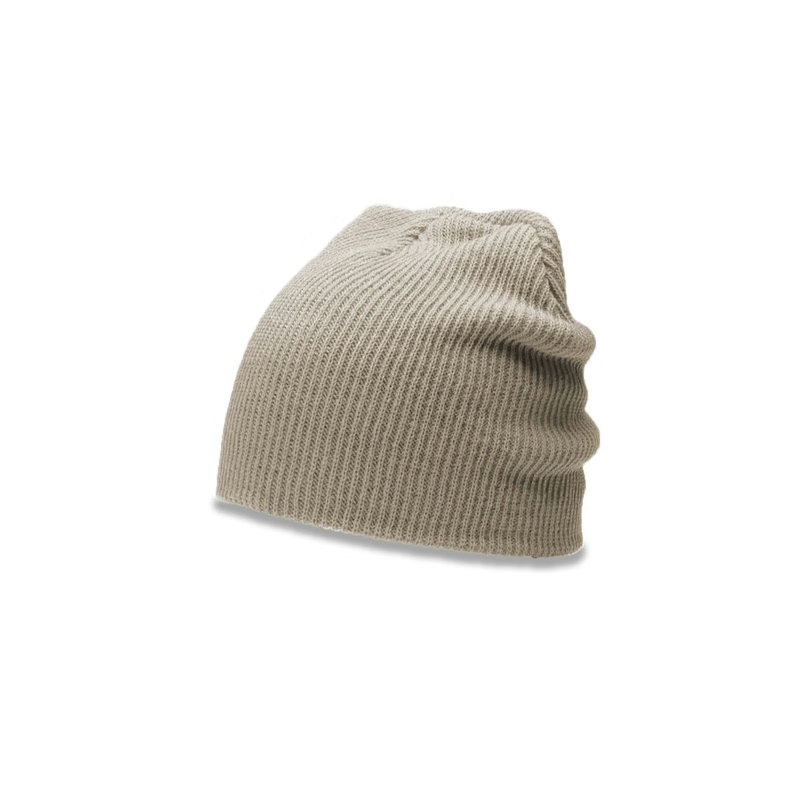
Slouch Knit Beanie
$10.00
View product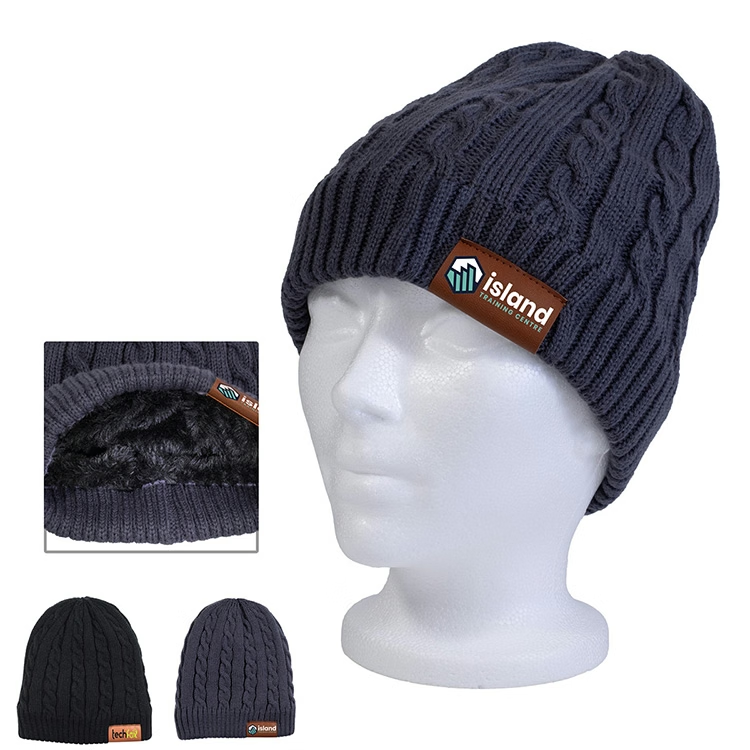
THE COZY Cable Knit Beanie With Fluffy Soft Lining
$6.39 - $6.80
View product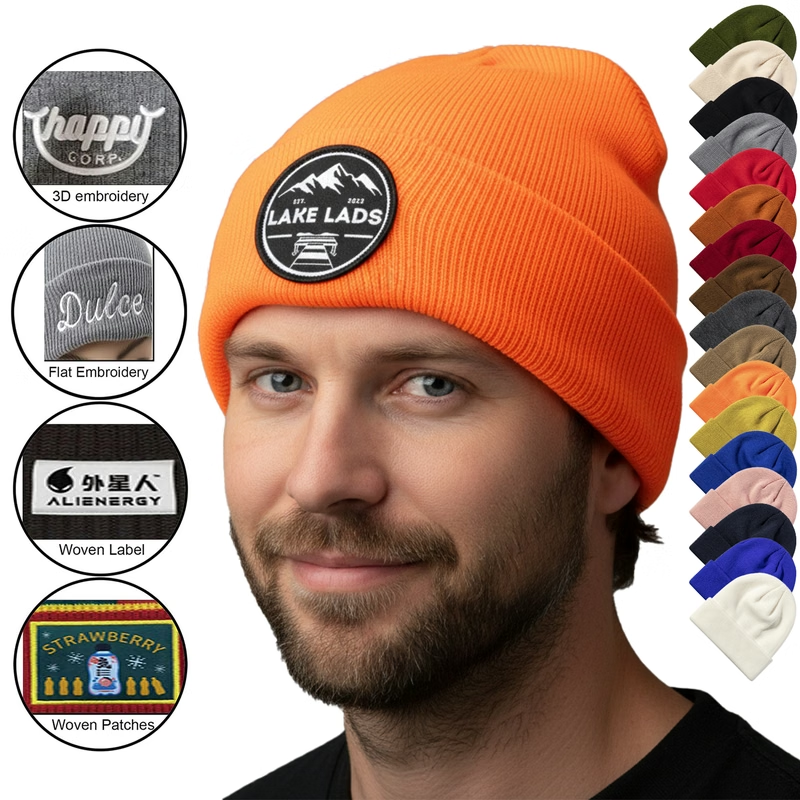
100% Acrylic Cuffed Knitted Beanie With Custom Logo
$9.88
View product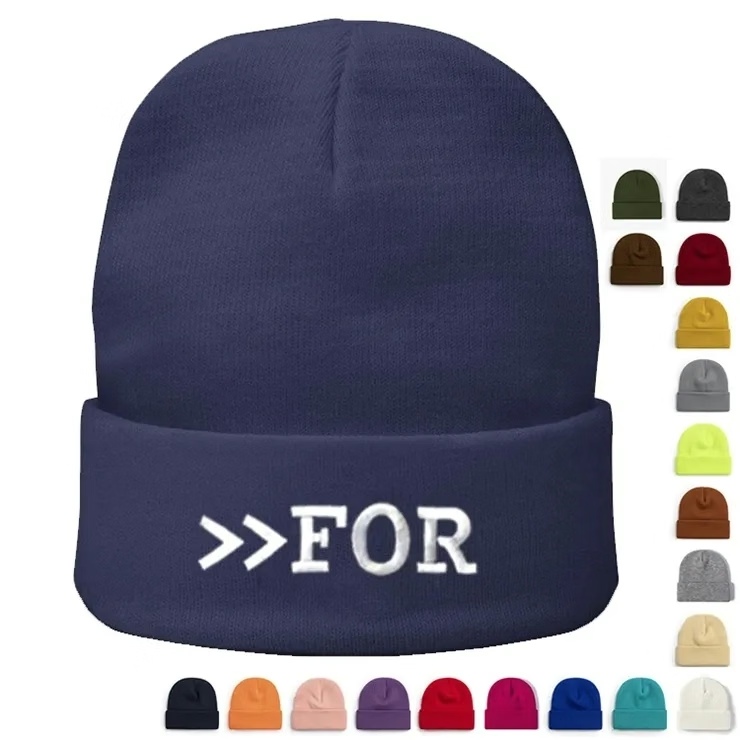
12 Long Knit Beanie with Cuff
$1.38 - $2.52
View product
Beanie FAQs
What material are beanies made from?
Most beanies use acrylic, wool, cotton, or polyester blends, often paired with a fleece lining for extra warmth.
Why do beanies have balls on top?
Nobody knows for certain. Leftover yarn, old folk traditions, and practical sailor gear all get credit as possible origins of the pom-pom.
Is a beanie considered a hat?
Yes. A beanie is a specific type of hat, defined by its knit construction and close, stretchy fit, distinct from a structured cap or brimmed hat.
What is the minimum order for beanies?
Minimum order quantities vary by decoration method, but six units is a common starting point for embroidered or custom-printed beanies.
How much do beanies cost?
Pricing depends on order size, material, and decoration method. Custom beanies typically run between $10 and $40 per piece for bulk orders.
How much should I price my beanies for retail?
Most retail beanies land in the $20 to $40 range. A common pricing rule doubles the manufacturing cost to set a fair retail price.
Why are beanies called beanies?
The name comes from early-1900s American slang, where "bean" was a casual word for someone's head. The cap that covered it eventually picked up the same name.
What's the difference between a beanie and a skull cap?
A skull cap is really just the most minimal, low-profile version of a beanie. Every skull cap is a beanie, but not every beanie is cut that close to the head.
How should a beanie fit?
A well-fitting beanie sits snug against your hairline without pinching, and it shouldn't slide down over your eyebrows. Slouch and pom pom styles are the exception, since some looseness is part of the design.
Are beanies still in style?
Yes. Winter fashion trends come and go, but beanies have stayed a wardrobe basic for well over a century, moving easily between casual streetwear and corporate gifting.
Conclusion
Five types of beanies dominate the market: slouch, fisherman, skull cap, high top, and pom pom. Each one fits a different look, climate, and branding goal, but all five share the same core appeal: warmth, comfort, and a wide surface built for custom logos. Picking the right beanie style starts with knowing your audience, and turning that style into lasting branded merchandise starts with the right partner.
RELYmedia brings the material knowledge, embroidery expertise, and fast turnaround needed to make any custom beanie order look sharp from the first stitch to the last.
Get a free quote from RELYmedia
Start building your branded beanie lineup before the cold weather hits.
Frequently asked questions
What are different names for beanies?
People use several regional and slang names for the same knitted cap, including toque, watch cap, stocking cap, skully, and ski cap. “Toboggan” is also Southern US slang for the same hat. These terms are usually about location and habit, not a truly different product, unless you are comparing distinct constructions like skull caps, slouch styles, or pom pom versions.
What are the 26 different types of hats?
Only beanie styles are covered here, not a full list of hat types. The five common beanie types are slouch, fisherman, skull cap, high top, and pom pom. These styles differ by fit and construction, such as cuffless versus cuffed builds, a tight low-profile shape for layering, or added height in the crown.
What are the brimmed beanies called?
The five main beanie styles listed are slouch, fisherman, skull cap, high top, and pom pom. A “high top” beanie is also called a peaked beanie, but it is defined by a taller crown rather than a brim. For cuffed looks, the fisherman beanie is often called a watch cap and has a ribbed knit cuff sewn in place.
What are the most popular beanies?
Five styles are described as dominating the market: slouch, fisherman, skull cap, high top, and pom pom. A slouch beanie is roomy and cuffless, a fisherman beanie is cuffed and sits closer to the head, and a skull cap is the most minimal, low-profile option. High top adds height, and pom pom adds a yarn ball at the crown.
What are beanies made of?
Common beanie materials include acrylic, wool, cotton, and polyester blends, with fleece-lined options for extra warmth. Acrylic holds color well and resists shrinking, wool is naturally warm but can feel slightly itchy to some, cotton is breathable for milder cold, and polyester is durable and often paired with fleece. Some knits add moisture-wicking fibers or tricot lining.
How do you wear different types of beanies?
Fit changes how each beanie looks. Pull a slouch beanie back slightly so it sits loose instead of tight. Roll a fisherman beanie’s cuff to sit just above your eyebrows for a classic look. Wear a skull cap snug against your hairline with no folded edge, and avoid pulling any beanie down over your eyebrows.
Shop this
Need custom branded beanies? We print them.
Bulk pricing, three free mockups, real quotes back the same business day.